| Use Pattern |
DNA “Molecular Switches” and Probes
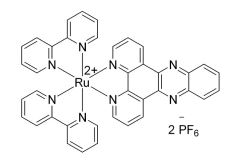
Luminescence Properties: In aqueous solutions, this ruthenium complex exhibits negligible luminescence (due to quenching by water molecules). However, when it binds to the DNA double helix structure—specifically within the major or minor grooves—or intercalates between base pairs, it emits intense fluorescence.
Diagnostic Applications: Used to detect the presence and concentration of DNA, as well as changes in DNA conformation. Because it remains “dark” in its unbound state and becomes “bright” upon binding, observation can be performed without the need to wash away unbound probes. |
Bioimaging and Cellular Sensing
Cell Staining: Capitalizing on its high photophysical stability and large Stokes shift, it is employed for imaging live cells.
Specific Organelle Targeting: Upon modification, these ruthenium complexes are often engineered as biosensors specifically targeted to mitochondria or cell nuclei, enabling the monitoring of microenvironmental changes within the cell. |
Photodynamic Therapy (PDT) Research
Photosensitizers: Under illumination, ruthenium complexes are capable of generating reactive oxygen species (ROS), such as singlet oxygen ($^1O_2$).
Antitumor Research: Researchers leverage the complexes’ strong affinity for DNA and their photosensitizing properties to explore their potential as photosensitizing drugs for the precision targeting of cancer cells, inducing DNA damage in tumor cells through irradiation with specific wavelengths of light. |
Electron and Energy Transfer
Photocatalysis Research: Ruthenium complexes possess excellent redox potentials and are frequently utilized to investigate photo-induced electron transfer (PET) processes.
Artificial Photosynthesis: In chemical laboratories, they serve as commonly used model molecules for mimicking natural photosynthetic reaction centers and studying energy transfer mechanisms. |
Nanotechnology and Biosensors
Modified Electrodes: Used in the fabrication of electrochemiluminescence (ECL) sensors for the detection of trace amounts of biomolecules or metal ions.
DNA Nanomachines: Employed in the construction of DNA nanodevices, where they function as indicators of structural stability or as signal output units. |